A conversation comes first

Book a Consultation for Body Contouring & Aesthetic Treatments

Review the official consultation route, organise your questions and decide on a next step that suits you.

Your next conversation

Start with the official consultation information

The official Lipo Sculpt booking page describes a £15 telephone consultation lasting 10–20 minutes. It says the fee is deducted from a booked and completed treatment, preferred callback times can be requested and you do not have to make a treatment booking during the call. Review the current official page before paying or arranging a conversation.

This page helps you decide what you would like to ask and how to make that discussion useful. The preparation ideas below are optional. They are not clinical instructions, mandatory booking requirements or a guarantee about the consultation you will receive. You can begin with a simple question and ask how to continue.

The booking button takes you to the official Lipo Sculpt website. This local page does not accept payment, reserve an appointment or submit personal information. If you are unsure which step to take, call 03300101799 or use Contact Us to find the approved destinations. Reading the published details and identifying the questions that matter to you can be a useful first stage, even before you decide to request a consultation.

£15

Published consultation fee

10–20 min

Published telephone-call duration

Your decision

No obligation to book treatment during the call

Explore topics on this page
  1. Decide what you want the conversation to answer
  2. Describe the concern in your own language
  3. Put the most important questions first
  4. Request a callback time carefully
  5. Check the fee before making a payment
  6. Use the call to understand the next stage
  7. Ask why an option is being discussed
  8. Separate hopes from the information available
  9. Ask who would provide the service
  10. Confirm the location before planning travel
  11. Treat a home visit as a question
  12. Discuss the scope of a treatment price
  13. Read booking conditions while you have time
  14. Share personal information through an appropriate route
  15. Keep notes that distinguish answers from assumptions
  16. You can take time after the conversation
  17. More than one concern can be organised
  18. A follow-up question can be short
  19. Choose the action that matches your readiness
Your next conversation · 01

Decide what you want the conversation to answer
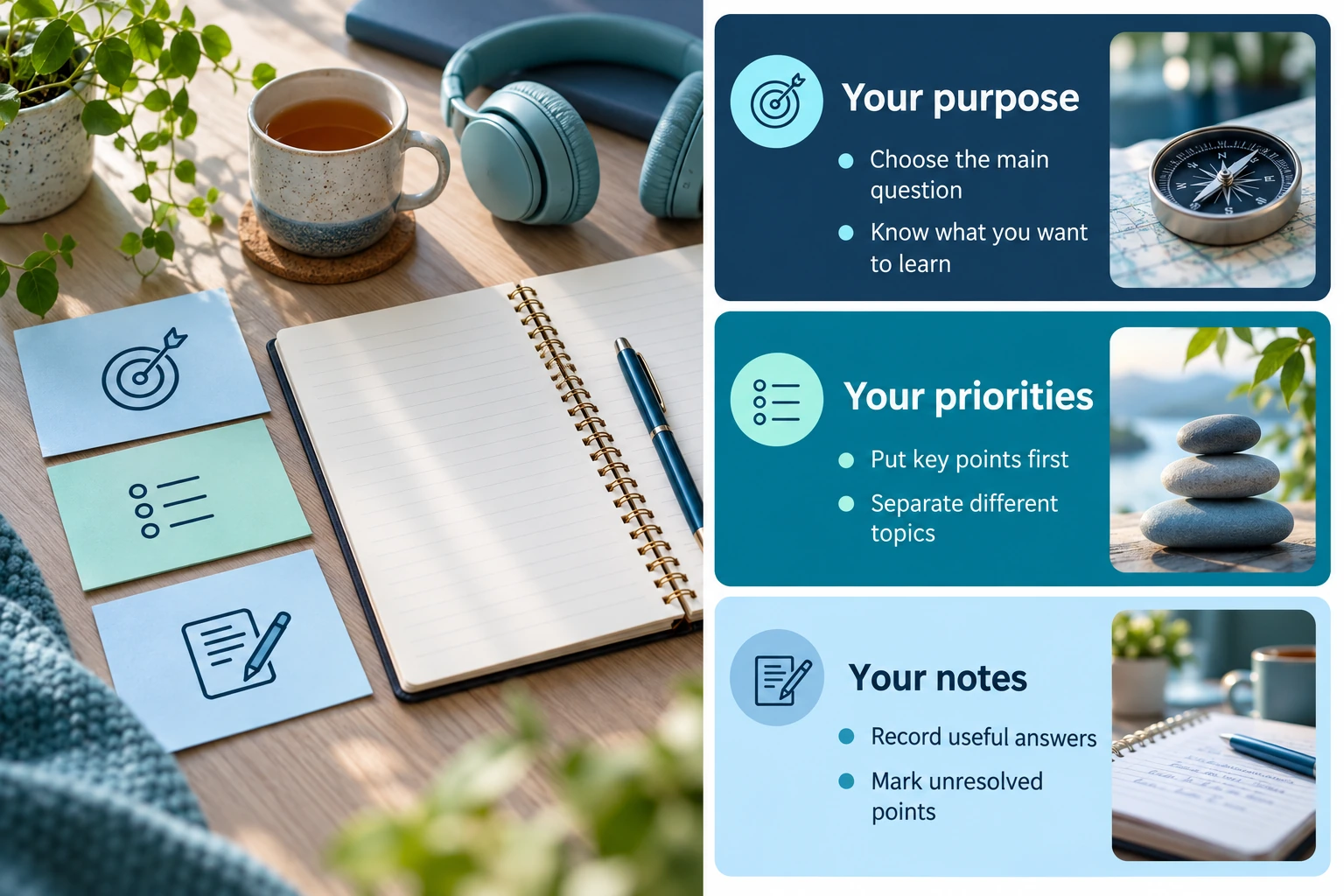
A consultation can feel easier to approach when you have a clear purpose for the discussion. You might want to understand which service description relates to your concern, how the next stage would work or what practical details need confirming. Choose the question that would make the biggest difference to your understanding.

You do not need to arrive with a treatment selected. Start with what prompted your interest and what you hope to learn. If several subjects are involved, distinguish the main question from the points you would like to cover afterwards. That can help you explain the enquiry without trying to summarise everything in one sentence.

Consider what a useful answer would look like. For a practical question, it may be a clear description of the next action. For a question about a service, it may be an explanation of what needs further assessment. The goal is understanding rather than an immediate commitment. Keeping that purpose visible helps you notice whether the conversation addresses your concern or leaves a particular point unresolved. You can then ask a more focused follow-up question instead of accepting a general answer as complete.
Your next conversation · 02

Describe the concern in your own language

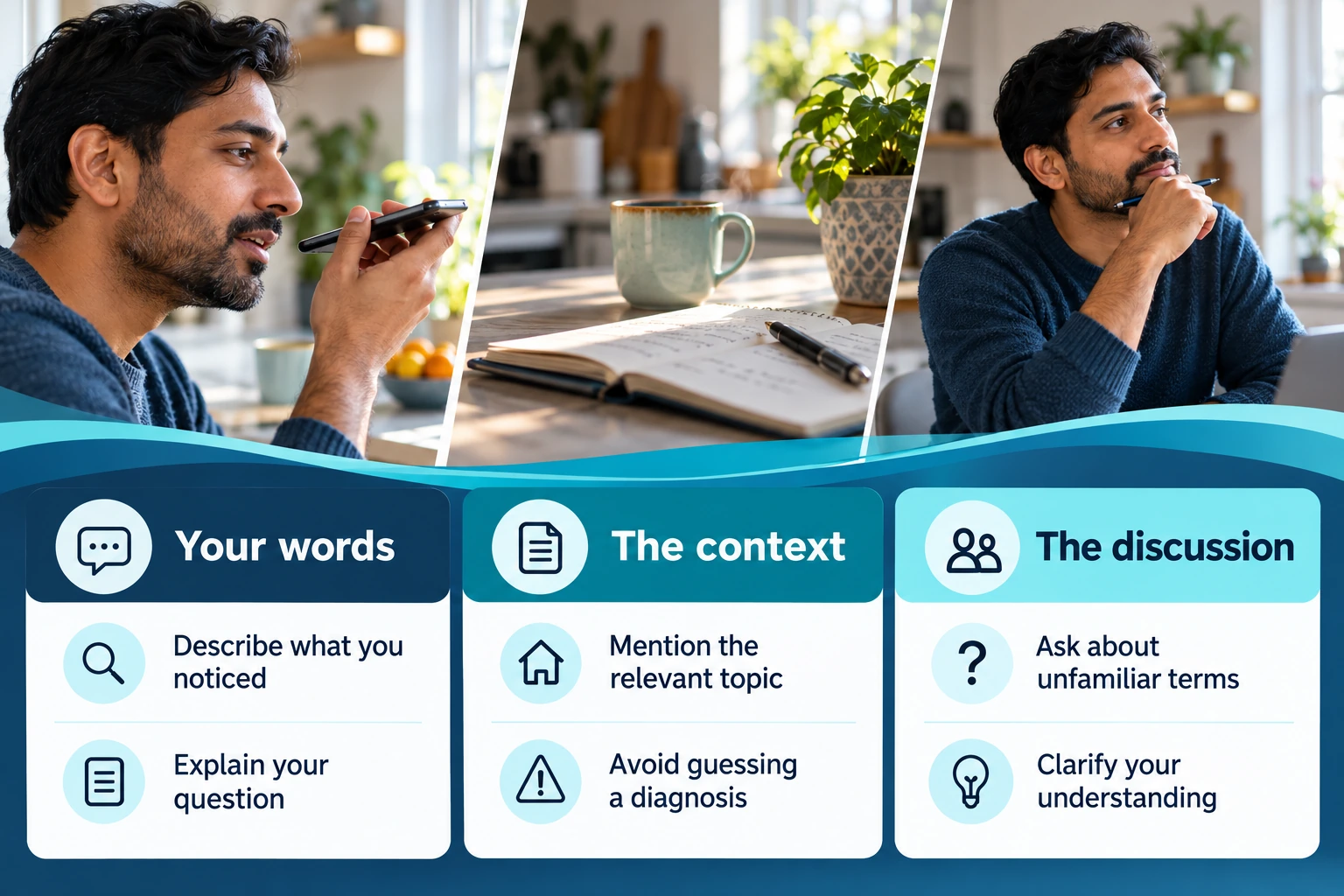
Everyday words are enough to begin an enquiry. You do not need to diagnose the concern, choose a technical label or adopt language from a treatment page. Explain what you noticed, what you are interested in discussing and why you want more information. Ask the person speaking with you to clarify any terms they introduce.

If you have read a description that seems relevant, mention the page or treatment name without presenting it as a conclusion. For example, you can explain that you saw a particular topic on Services and want to understand whether it belongs in your discussion. That keeps the conversation open to clarification.

It may help to write a short opening note before the call. Keep it to the concern and the question rather than a complete account of every detail. You can add relevant information when an appropriate person asks for it through a suitable route. This preparation is for communication, not self-assessment. A clear description helps the other person understand the subject, while leaving any individual suitability decision to the relevant process. If you find it difficult to put the concern into words, say that and ask how to begin.

Your next conversation · 03

Put the most important questions first

The published consultation duration gives you a reason to prioritise, rather than to prepare a long script. A few well-chosen questions may be easier to discuss than a list of every thought that arose while reading. Start with the points that would affect whether you want to continue exploring the service.

You might group questions under three headings: the option itself, the practical arrangement and the conditions around booking. Within each group, identify the one point that needs an answer first. If the discussion introduces new information, you can adapt the list rather than trying to follow it rigidly.

Keep a separate space for questions that can wait. That reduces the pressure to cover everything at once and helps you recognise when a subject needs another conversation. If an important point remains unanswered, ask how it can be addressed before proceeding. The preparation is meant to support your attention, not create an exam to pass. You can use a short note, speak without notes or simply begin with one question. Choose the format that helps you listen as well as explain.

Your next conversation · 04

Request a callback time carefully

The official booking information allows preferred callback times to be requested. A preference is useful information for the business, but it is not confirmation that a particular call has been scheduled. Make the distinction clear when discussing an arrangement.

If timing matters, describe the periods when you could comfortably speak and ask how the actual time will be confirmed. You may wish to mention whether you need notice before the call or whether a particular period is difficult. Avoid assuming that the first preference you give has already been accepted.

Choose a setting where you can listen and discuss the subject without unnecessary interruption. If that is not possible at the proposed time, ask about the appropriate next step. It provides a route to the official information and encourages you to confirm the arrangement directly. Once a time is agreed, keep the relevant details together so that you know what has been confirmed, what you have requested and whether any further action remains. That simple distinction can prevent a preference from being mistaken for an appointment.

Your next conversation · 05

Check the fee before making a payment

The published consultation fee is £15, with the official page describing a deduction from booked and completed treatment. Follow the official booking link to review the current wording, the payment destination and any related conditions. This page does not collect money or reproduce a checkout.

Before taking the payment step, establish what the payment is for. If you are unclear about when the deduction applies, how it would be shown or how it relates to a proposed arrangement, ask the business to explain. Do not assume that a consultation fee establishes a treatment appointment or covers every later cost.

Keep the payment information separate from your notes about the service. A receipt may show that a transaction occurred, while confirmation of a call or treatment may be a different communication. If you later need to ask a question, identifying which action the record relates to can make the enquiry clearer. Use the actual published information and the explanation given for your arrangement. This preparation guide does not add a refund promise, discount, payment deadline or cancellation rule to the official terms.

Your next conversation · 06

Use the call to understand the next stage

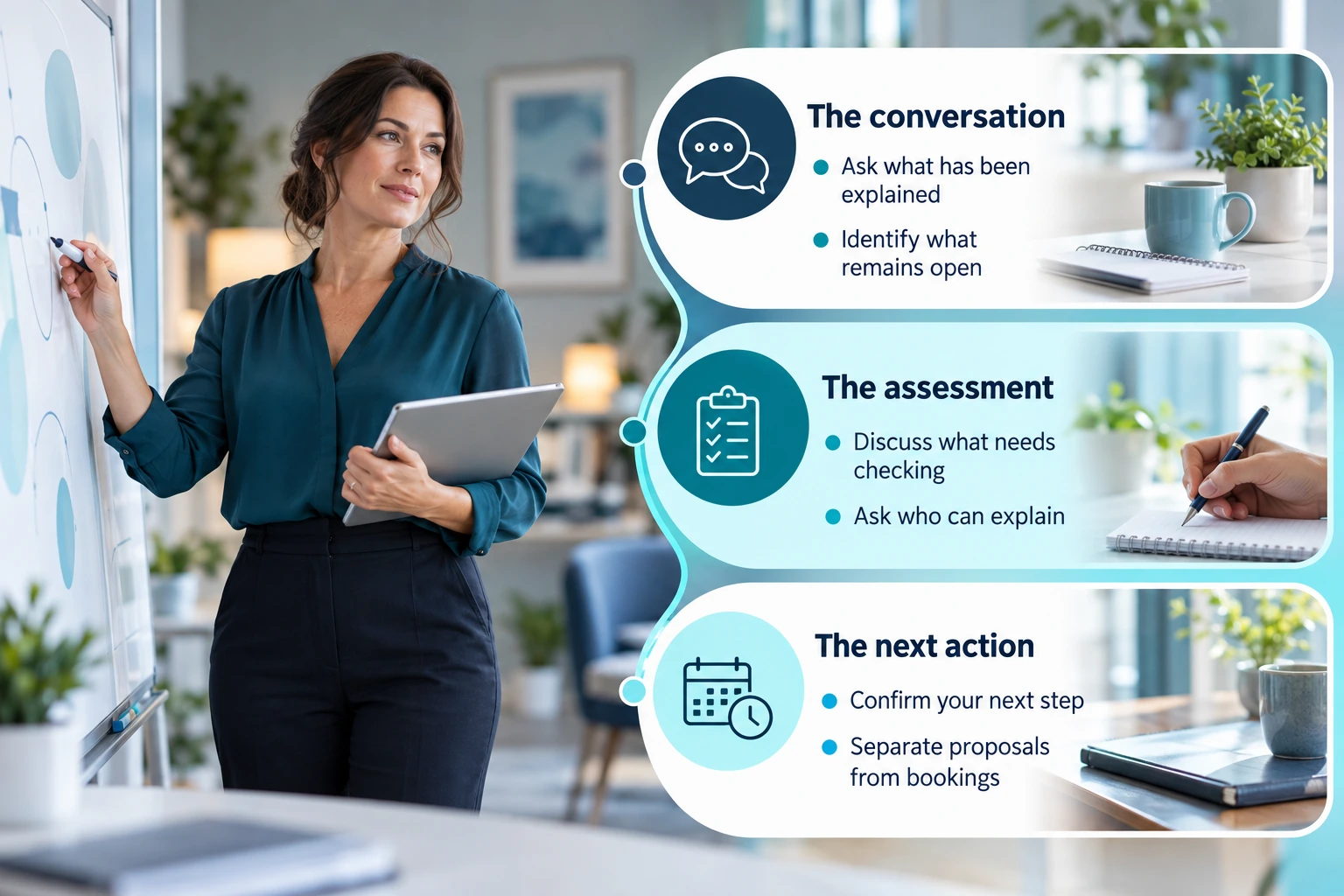
One useful question is what would happen after the conversation if you remained interested. The answer may involve further information, a proposed appointment or another step to be confirmed. Ask for that sequence to be explained rather than inferring it from the fact that a consultation has taken place.

Distinguish an introduction to a service from an individual suitability decision. If the conversation suggests an option, ask what information supports that suggestion and what still needs to be checked. You can also ask who would explain the next stage and whether any details need confirmation before you make plans.

This page cannot prescribe the process for every service. It offers questions that may help you understand the process described for your enquiry. Listen for the difference between something already arranged and something that could happen if you decide to proceed. At the end of the call, you should be able to describe your own next action, if there is one. If you cannot, ask for a short explanation. Clarity about the next stage is useful whether you choose to book, continue reading or take time to consider the information.

Your next conversation · 07

Ask why an option is being discussed

When a service is mentioned, you may want to understand its connection with the concern you described. Asking why it is being discussed can be more helpful than asking only whether it is available. The explanation should give you a clearer view of the subject and the questions that remain.

You can ask which part of your enquiry the option relates to, what information would be needed to explore it further and what alternatives or limitations should be explained by the appropriate person. These are communication prompts, not a treatment-selection method. They do not establish that a particular option is suitable for you.

Avoid treating familiarity with a name as a substitute for understanding the proposal. If you have seen the term online, say what you understood it to mean and ask whether that interpretation fits the conversation. A difference in terminology can otherwise make an answer sound clear while leaving you with a mistaken picture. Keep the reasoning with the service name in your notes. That gives you something more useful to review later than a list of options without their explanations.

Your next conversation · 08

Separate hopes from the information available

It is reasonable to bring personal expectations to a consultation. Explaining those expectations helps define the conversation, but it does not turn them into an outcome that can be promised. Ask which parts can be discussed at this stage and which would need further assessment or explanation.

If a photograph or description shaped your interest, identify what you noticed rather than presenting the example as a forecast. You may be interested in a particular feature, the general appearance or the type of concern being described. Those are different subjects and may call for different questions.

Record uncertainty alongside the information you receive. An answer that explains a limitation can be valuable, even if it is less definite than you hoped. This guide does not add success statistics, expected result times or clinical guarantees. Its purpose is to help you ask about expectations in a way that preserves the difference between preference, general description and individual explanation. You can review those distinctions after the call and decide whether you need another answer before taking a further step.

Your next conversation · 09

Ask who would provide the service

If the conversation moves towards an appointment, ask who would be involved in the proposed arrangement. The person answering an initial enquiry and the person providing treatment may have different roles. Knowing which explanation belongs with which person can help you direct later questions appropriately.

You may want to ask what information can be provided about the practitioner, their role and any relevant qualifications or registrations. This website does not invent those details. Request information that relates to the actual proposed service rather than assuming that a general business description identifies everyone involved.

Keep the answer connected to the appointment being discussed. If the arrangement changes, ask whether the person or location has changed too. A clear record can help you avoid carrying an earlier assumption into a different proposal. The images on this page are illustrative artwork; they do not show a verified team or clinic. Use the conversation to learn about the actual person and setting. These questions are optional preparation prompts, but they can be useful when the identity of the provider is an important part of your decision.

Your next conversation · 10

Confirm the location before planning travel

The UK scope described by Lipo Sculpt does not establish a particular local appointment. If location matters, explain the broad area relevant to your enquiry and ask which arrangement can be discussed for the service. Obtain the practical details before organising travel.

Check the location alongside the date, the person involved and the service being proposed. These details work together. A suitable date is less useful if the place has not been confirmed, and a familiar location does not establish that a particular service will be available there.

This page does not add clinic addresses, travel promises or a local availability calendar. If you have a practical access requirement, describe it and ask what can be confirmed. You do not need to assume that the business can accommodate it, but you can make the question visible early enough to discuss. Keep a note of the confirmed details rather than relying on the general geographical wording of the website. Where a proposal is still provisional, label it that way in your own notes until the appropriate confirmation arrives.

Your next conversation · 11

Treat a home visit as a question

If a home visit is relevant to your circumstances, ask about it directly for the service you are discussing. Do not assume that a general reference to home visits means every option can be arranged in every area or setting. The particular arrangement needs confirmation.

You may want to understand what information the business needs to consider the request, who would explain the practical requirements and how any agreed visit would be confirmed. Keep the enquiry at that level until you are told what detail is appropriate to share. This page does not supply a home-visit preparation protocol or an assessment of the setting.

If a home visit is unavailable or unsuitable for the proposed arrangement, ask what other practical options can be discussed. That gives you a clearer basis for deciding whether to continue. The objective is to establish what can actually be arranged, rather than to build a plan from a broad website statement. As with a clinic appointment, keep preferences separate from confirmation and check the service, date and other relevant details together before relying on them.

Your next conversation · 12

Discuss the scope of a treatment price

If a treatment cost is discussed during the consultation, ask what the amount includes. A figure may refer to a single session, an area, a course or a particular offer. Understanding the scope helps you compare the proposal with your expectations and avoid assuming that every later step is included.

You can ask which parts of the arrangement have been priced, which remain open and where the conditions can be reviewed. If you are comparing information from another page, identify the source and ask whether it applies to the current proposal. A similar service name does not necessarily establish that two figures refer to the same arrangement.

Keep the treatment quotation distinct from the consultation fee. This guide does not provide a price list or calculate a total. It encourages you to obtain a clear description from the business. Review the relevant Terms before making a further payment and ask about any wording you do not understand. A useful price explanation connects the amount with the actual service and conditions, giving you a complete subject to consider rather than an isolated number.

Your next conversation · 13

Read booking conditions while you have time

Before making an appointment or payment, read the full official Terms linked from this website. The local overview helps you find the subjects to discuss, but it does not replace the published document or settle an unclear provision.

The official wording contains different cancellation notice periods in different sections. The overview identifies that uncertainty and directs you to ask which requirement applies to the arrangement you are considering. Do not select the more convenient period yourself or treat a summary as confirmation.

You may also want to ask what happens if a date needs changing, how a deposit relates to the proposed appointment and which conditions apply to an offer or course. These are questions to resolve through the current official information and a specific answer. This page does not create new provisions. Reading before the action gives you an opportunity to clarify the point while the decision is still open. Keep the explanation with the relevant booking information so that you can understand the arrangement as a whole when reviewing it later.

Your next conversation · 14

Share personal information through an appropriate route

A consultation may involve personal subjects, but you can first ask how information should be provided. Avoid placing sensitive details in a public social comment or sending a long account through a route whose purpose you have not checked. Begin with the general enquiry when that is enough to arrange the discussion.

The Privacy overview links to the full official policy. Read the relevant information before using an external form or payment destination, and check that you understand where the action is taking place. The local booking page does not contain a submission form or collect payment details.

If someone asks for additional information, establish why it is needed and how it should be shared. This guide does not specify what clinical history is required or substitute for instructions from the appropriate professional. It simply encourages a clear, relevant conversation about the route. Keep private information out of general notes that you intend to share publicly. A short list of questions can help organise the call without becoming a complete personal record, especially when you are still at the initial enquiry stage.

Your next conversation · 15

Keep notes that distinguish answers from assumptions

During or after the call, a few notes can help you remember the information that influenced your thinking. Record the question, the answer and anything still to be confirmed. Keeping those categories separate makes the notes more useful than a single summary of the overall impression.

For practical details, note whether something was confirmed or simply discussed as a possibility. For a service explanation, record the reason given and the point that needs further assessment. If you are uncertain about what you heard, ask for clarification before relying on your interpretation.

You do not need to transcribe the conversation. A brief record of the important points is often easier to review. Avoid collecting unrelated personal information in the notes, and store any private details in a way appropriate to your circumstances. The purpose is to support your own understanding. When you return to the information later, you should be able to see why a point mattered and whether it has been resolved. That can help you formulate a focused follow-up instead of starting the same enquiry from the beginning.

Your next conversation · 16

You can take time after the conversation

The official booking page says a treatment booking does not have to be made during the telephone call. You can use that space to review the information, check practical details or decide which question needs another answer. The consultation can be one stage in your decision.

Afterwards, compare the discussion with the questions you prepared. Which answers clarified the concern? Which points remain uncertain? Did the practical arrangement fit your circumstances? Reviewing those subjects separately may help you avoid letting one positive impression stand in for a complete understanding.

If you need more information, identify the specific point before contacting the business again. If you choose to wait, keep the relevant notes so you can recognise what might need checking afresh later. An earlier explanation does not confirm future availability or unchanged conditions. This page does not set a decision deadline or promise that an offer will remain open. Let your next step reflect the information available and your own readiness, while checking current details before making a new commitment.

Your next conversation · 17

More than one concern can be organised

If you want to discuss several subjects, list them separately and identify which is most important to you. That helps prevent different concerns from becoming a single broad question that is difficult to answer. You can explain that there are other topics you would like to explore without assuming they will all be resolved in one call.

Ask how the discussion should be structured and whether a particular subject belongs in a separate conversation. Different service descriptions may involve different questions, so an answer about one should not automatically be applied to another. Keep notes under the relevant topic.

This preparation does not prescribe a treatment combination or suggest that multiple services should be booked together. It is a way to make communication clearer when your interests are varied. If a proposal covers more than one option, ask for each part and its practical conditions to be explained. You should be able to understand the individual subjects as well as their relationship in the discussion. If the explanation becomes difficult to follow, pause and return to the question you wanted answered first.

Your next conversation · 18

A follow-up question can be short

When you contact the business after a consultation, identify the discussion and the one point that needs clarification. A focused question can be easier to direct than a complete retelling of the call. Include only the relevant details through the appropriate private route.

For example, you may need confirmation of whether a proposed time was accepted, clarification of what a price includes or an explanation of the next assessment stage. State what you understood and what remains uncertain. That gives the person responding a clear opportunity to correct or complete the information.

Do not treat this guide as a source of guaranteed follow-up procedures or response times. Ask the business how the subject should be handled if you need those details. Keep the new answer with your earlier notes, especially if it changes a practical arrangement. If the answer addresses a different point, return to the specific question rather than assuming the original issue has been resolved. A useful follow-up closes a defined gap in your understanding and leaves you clearer about any next action.

Your next conversation · 19

Choose the action that matches your readiness

If you are ready to review the consultation route, use the official booking button. You will leave this page for Lipo Sculpt's published information, where you can inspect the current details before deciding what to do. Opening that page does not itself make a booking.

If you still need a general answer, call the approved telephone number or use Contact Us to find the official social destinations. If you want to learn more about the catalogue first, return to Services. The Privacy and Terms overviews are available when the question concerns information sharing or booking conditions.

Before taking the next step, identify the action you intend and the details it depends on. You may be ready for a conversation while still undecided about treatment. You may understand the service discussion but need a practical answer. You may prefer to continue reading. Each stage can be approached clearly without turning an interest into a promise about an outcome. Use the information you have, keep open questions visible and confirm the actual arrangement through the official route.